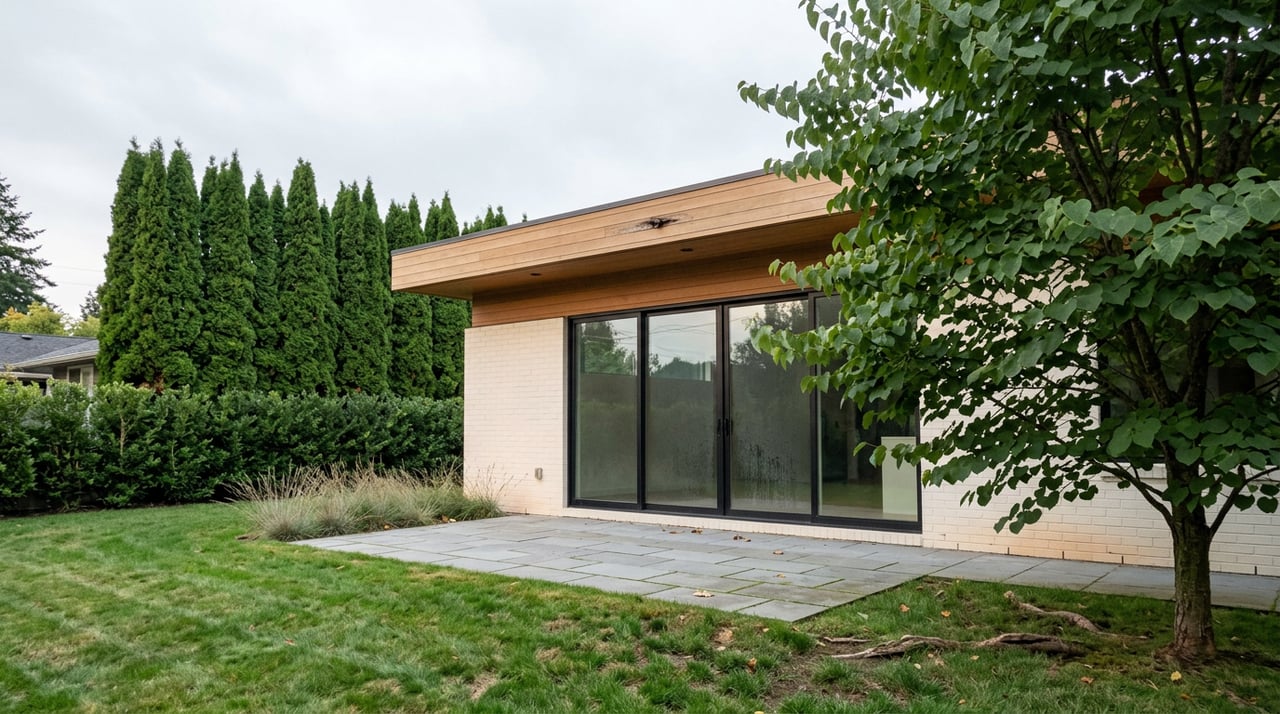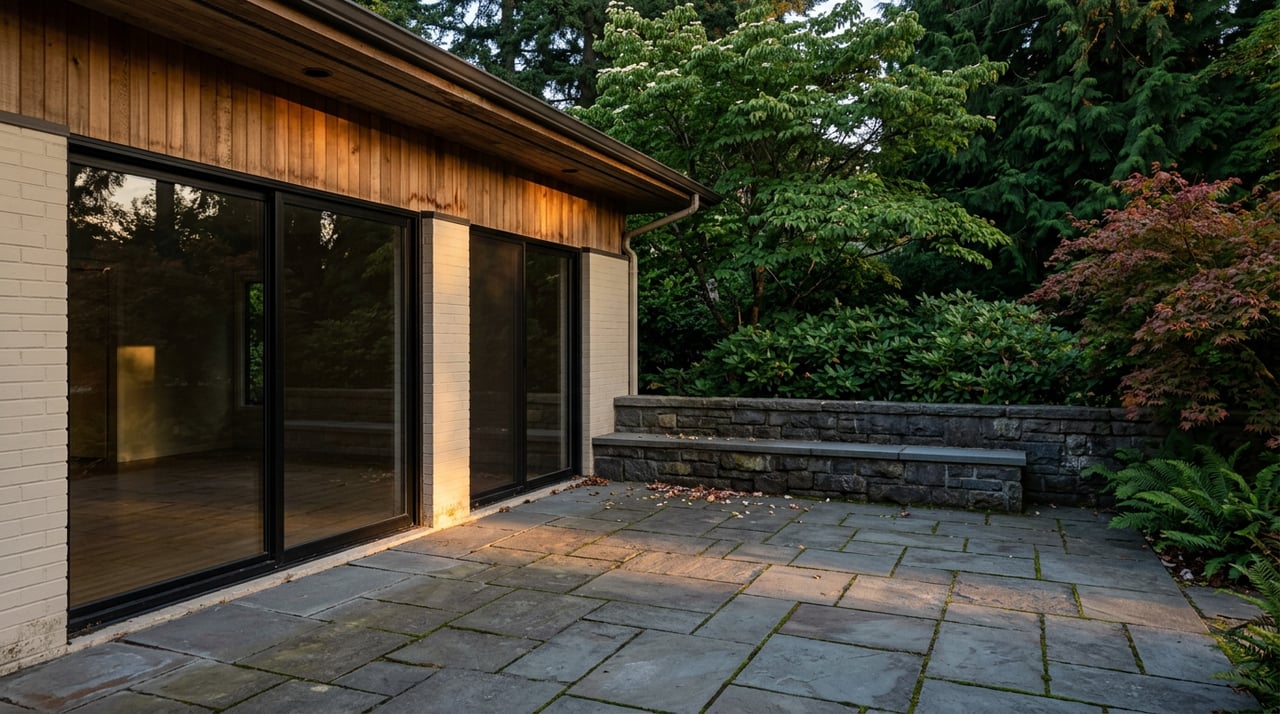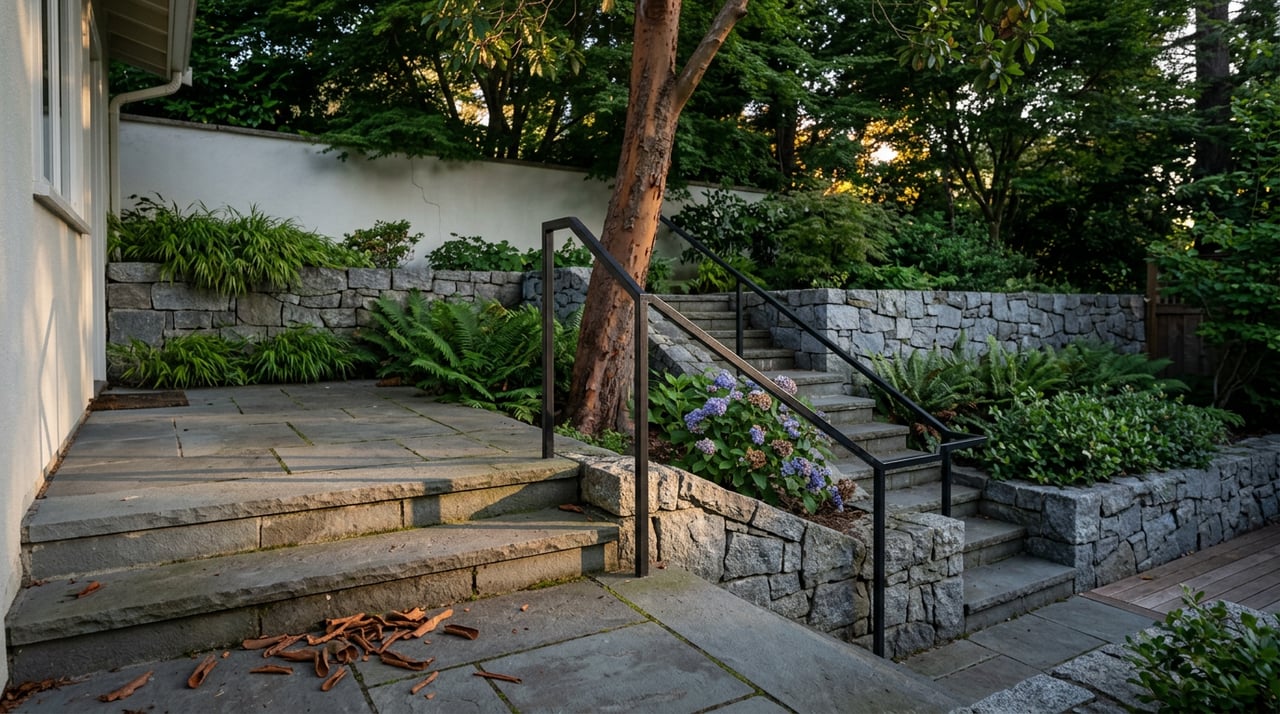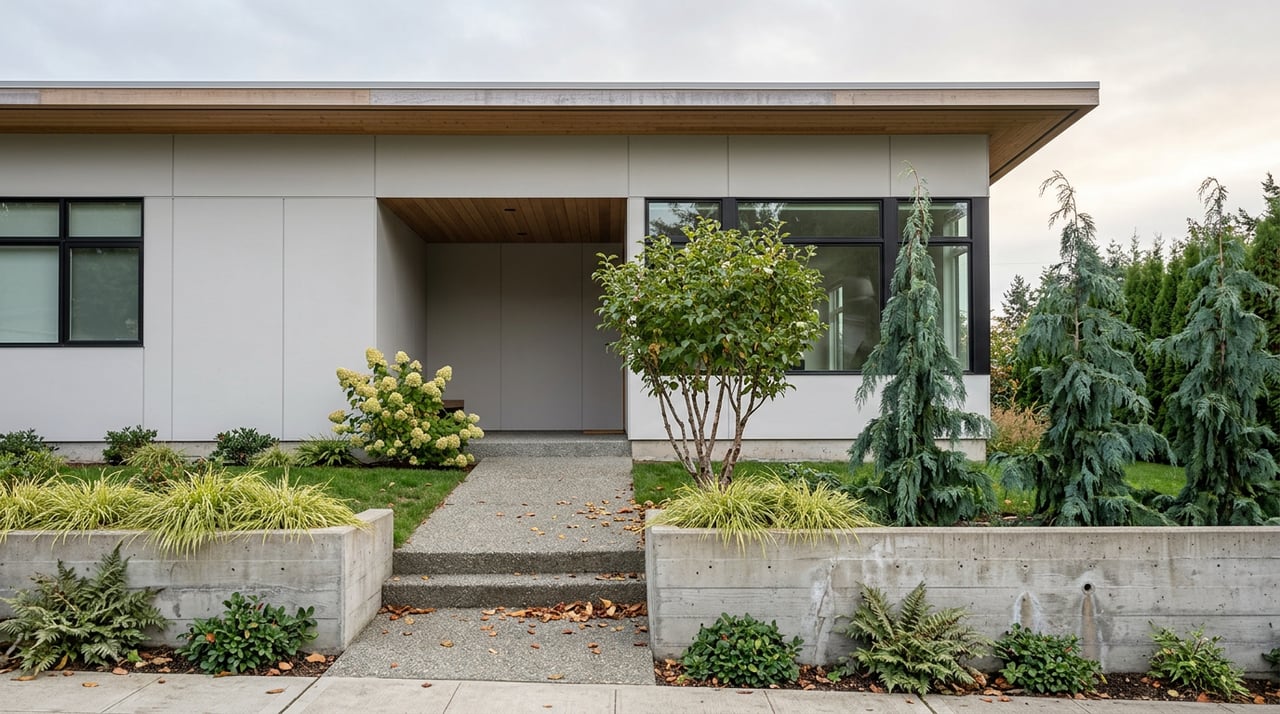
Why does a bluff-view home in Magnolia sell for less per square foot than a comparable hillside view in West Queen Anne? Both neighborhoods sit within a few miles of downtown Seattle. Both trade heavily on water views, mature landscaping, and a quieter pace than the city core. On paper, a buyer comparing the two should expect similar pricing per square foot. The market does not agree, and the gap points to something most listing sheets never mention.
As of mid-2026, Magnolia's median asking price per square foot runs around $603, against $712 in West Queen Anne, a submarket up 16.3 percent year over year. Seattle's citywide figure for the same period sits at $537. So Magnolia commands a real premium over the city average, the kind of premium you would expect from a water-adjacent, view-driven neighborhood. But it trails its closest comparable, a fifteen-minute drive away, by roughly 15 percent. That gap is not explained by square footage, lot size, or school assignment. It is explained, at least in part, by how you get on and off the peninsula.
Four Bridges, One Way Out
Magnolia sits on a peninsula bounded by Elliott Bay to the south, Puget Sound to the west, and Salmon Bay to the north. According to the Seattle Department of Transportation's own planning documentation, there are exactly four vehicle connections between Magnolia and the rest of the city: the Magnolia Bridge, W Dravus St, W Emerson Pl, and the Fort St Bridge. No passenger rail serves the neighborhood. There is no water-based transit as a backup, despite Fisherman's Terminal sitting at the peninsula's northern edge and the Port of Seattle bordering it to the south and east, a gap the Magnolia Community Council has flagged for both routine and emergency transport needs.
West Queen Anne, by comparison, connects to the rest of Seattle through a denser grid of arterial streets with no single chokepoint carrying the bulk of daily traffic. That structural difference does not show up in a comparative market analysis. It shows up in how a market prices risk over time.
A Bridge With a Long Paper Trail
The Magnolia Bridge itself carries most of that risk. Built in 1930 as a concrete replacement for a 1912 wood trestle, it has been reinforced repeatedly: steel cross bracing added to its west half in 1961, matching work on the east half in 1974, concrete barriers in 1981, new ramps for Elliott Bay Marina in 1991. A 1997 landslide damaged piers at the bridge's west end. The 2001 Nisqually earthquake damaged nearly half of the original concrete lateral bracing, closing the bridge until crews installed tubular steel bracing in its place.
The city studied a full replacement for four years starting in 2002, reviewing 25 alignment concepts before settling on a like-for-like rebuild as its preferred alternative in 2006, with an estimated cost of $262 million. No funding followed. By 2018, that estimate had climbed to $350 to $400 million, and a Seattle Times investigation that year found the bridge listed as structurally deficient in the National Bridge Inventory, with routine inspections turning up deck cracks as long as 20 feet and concrete flaking off its support columns. State Sen. Reuven Carlyle, reacting to the funding gap at the time, put it bluntly: "We're a 21st-century city and region." A later SDOT-led study in 2019 priced out four alternative alignments ranging from $190 million to $420 million, still well beyond what the city could commit without state or federal partners.
The 2026 Pivot: Preserve, Not Replace
That two-decade replacement saga effectively ended this year. Rather than pursue a new bridge, SDOT has launched the Magnolia Bridge Preservation Project, aimed at keeping the existing 96-year-old, roughly 2,650-foot structure functional through concrete and steel repairs, deck restoration, and expansion joint work, with seismic resiliency improvements to be evaluated depending on funding. The timeline runs field inspections and structural assessment through fall 2026, alternatives evaluation in spring 2027, 30 percent design by summer 2027, and final design by spring 2028.
In practical terms, the city has shifted from asking how to replace the bridge to asking how to keep the one it has standing a while longer. SDOT maintains the span is safe for day-to-day travel and monitors it around the clock, but the preservation project is itself an acknowledgment that the structure needs sustained, funded attention rather than a permanent fix.
What the Diversion Plan Tells You
SDOT's own traffic modeling gives a sense of what happens if the Magnolia Bridge is ever unavailable. According to the department's 2017 traffic maintenance analysis, roughly three-quarters of morning peak-hour traffic that currently uses the bridge would divert to W Dravus St, with the remainder routing to W Emerson Pl. In the afternoon peak, the split runs closer to 70 percent Dravus, 30 percent Emerson. Past closures, including the months-long shutdown after the 1997 landslide and the 2001 earthquake, produced delays of 15 to 30 minutes for affected commuters.
None of this means a closure is imminent. It means the city has needed a documented emergency plan for exactly this scenario more than once in the bridge's history, and that plan still leans on the same two secondary bridges as its backup.
What Buyers Are Actually Paying For
| Submarket | Median asking price per square foot, mid-2026 |
|---|---|
| Seattle citywide | $537 |
| Magnolia | $603 |
| West Queen Anne | $712 |
Magnolia's median sale price runs close to $953,000, based on Northwest MLS data refreshed in July 2026, with active inventory near 106 listings and homes moving in a median of 9 days. That places it above Seattle's citywide sale median, which lands somewhere between $868,250 and $890,000 depending on whether you use NWMLS-based reporting for July 2026 or Redfin's three-month trailing figure through June, a gap that exists because the two methodologies handle house and condo sales differently. Typical asking prices in Magnolia run $1 million to $1.8 million for interior lots and $2 million to $5 million or more for bluff and water-view homes, according to the same July 2026 data.
So Magnolia is not cheap. It is a genuine premium submarket that still sells quickly. But the per-square-foot gap against West Queen Anne is wide enough, and consistent enough across sources, that it is worth asking what accounts for it beyond view quality and lot character. Access resilience is a reasonable part of that answer, and it is a variable that never appears as a line item on a listing sheet.
The Same Isolation Cuts Both Ways
Here is the part that gets missed in most comparisons. The same geographic isolation that creates Magnolia's bridge dependency is what keeps it quiet. West Queen Anne's denser street grid means more through traffic, more transit options, and less exposure to a single point of failure, but it also means more ambient noise and less separation from the rest of the city. Magnolia's peninsula geography limits through traffic almost entirely to residents and their guests, because there is nowhere else for that traffic to be headed.
That tradeoff is not a flaw the market has overlooked. It is priced. Magnolia's discount to West Queen Anne on a per-square-foot basis looks less like a penalty and more like the cost of admission to a neighborhood that cannot be casually passed through. Buyers who want that quiet are paying less per square foot for it than they might expect, precisely because the same structural feature that produces the calm also produces the access risk.
What This Means If You're Comparing Neighborhoods
If you are weighing Magnolia against West Queen Anne, Madrona, or Madison Park, a few things are worth carrying into that comparison:
- Ask what a preservation-era construction phase might mean for your specific commute route, particularly if your daily path already runs near the Garfield Street corridor. Field work is active now through fall 2026, with heavier design and construction phases still years out.
- Treat the psf gap as partially explained, not fully. View quality, lot depth, and proximity to Discovery Park all play a role too. Access is one input among several, not the whole story.
- If quiet and separation from through traffic matter more to you than density of transit options, the peninsula's structure is working in your favor, not against it.
A Few Questions Worth Asking Directly
Is the Magnolia Bridge closing soon? No. SDOT maintains 24-hour monitoring and has stated the structure remains safe for daily use. The current project is a preservation and repair effort, not a closure notice.
Will the 2026-2028 preservation timeline affect my commute if I buy now? Near term, expect to see survey crews and inspection activity through this fall. Design phases run into 2028, so any construction-related detours are more likely years out than immediate.
Does any of this affect resale value? There is no evidence of a price collapse tied to the bridge story. Magnolia still sells above the citywide median and moves quickly. The per-square-foot discount against comparable view neighborhoods appears to already reflect this factor, which suggests it is a durable feature of the market rather than a risk waiting to be priced in later.
Comparing neighborhoods on view quality and square footage alone will get you most of the way to a good decision. Getting the rest of the way means asking what a listing sheet cannot tell you, and that is exactly the kind of local groundwork Nancy Wallace Homes does for every buyer weighing Magnolia against its closest comparables. If you are trying to figure out what a view is actually worth once you account for how you get to it, Let's Connect.