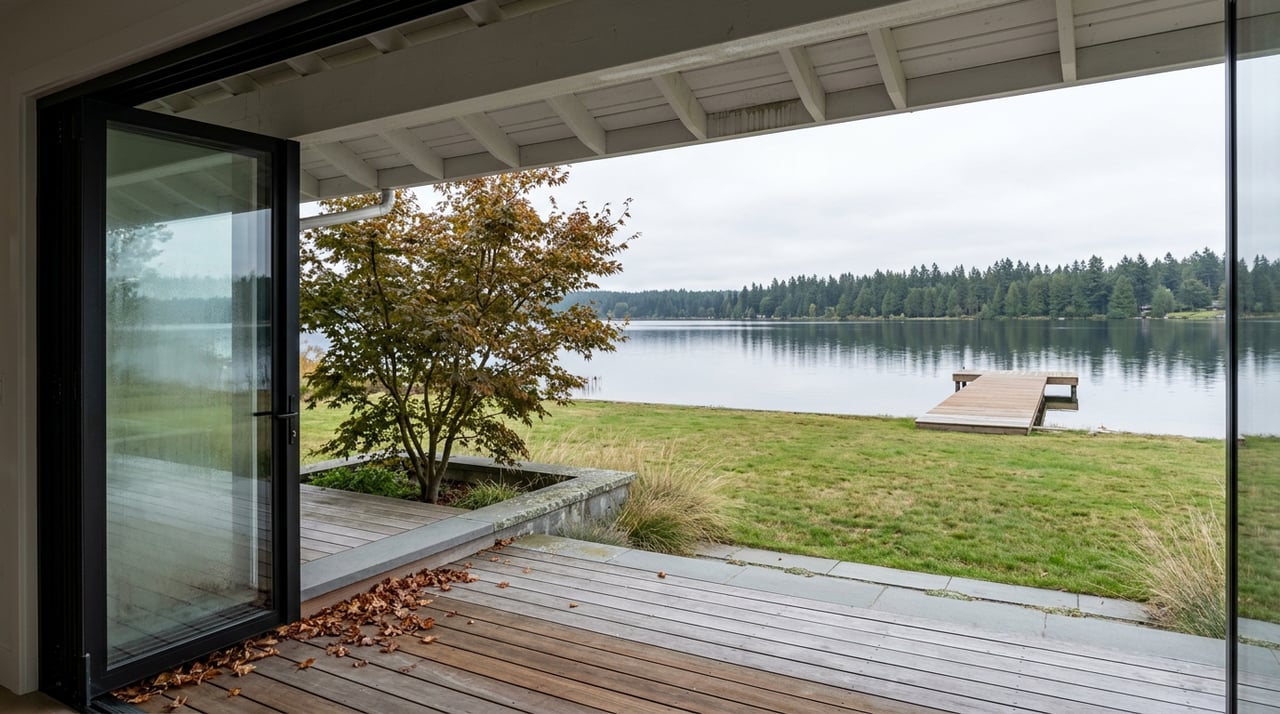
A buyer touring a Lake Washington property in Kirkland will spend most of the walkthrough on the house: the kitchen, the primary suite, the view corridor from the deck. The dock gets a glance. It looks like a plank structure that comes with the parcel, the way a driveway comes with a lot. In Kirkland, that assumption is where transactions slow down. The dock is not an amenity attached to the house. It is a separate, heavily regulated structure with its own permit history, and that history can matter more to your closing timeline than anything the inspector finds inside.
The mechanism that catches people off guard is a dollar figure, not a size limit. Washington's Department of Ecology sets a threshold for what counts as "substantial development" on a freshwater dock rebuilt at the same or smaller footprint, and that threshold was last adjusted to $28,000 in fair market value in 2023. Cross it, or change the footprint at all, and a project that looks like routine maintenance moves onto the same review track as new construction. A homeowner replacing a few rotted boards can stay in the exempt lane. A homeowner replacing the whole decking surface, or adding a boat lift, often cannot. The line isn't about how big your dock is. It's about which side of that number the project lands on.
Who actually reviews a Kirkland dock project
Once a project crosses into substantial development, it stops being a one-agency conversation. A single dock repair in Kirkland can be reviewed by:
- The City of Kirkland, under the Shoreline Master Program codified in Chapter 83 of the Kirkland Zoning Code
- The Washington State Department of Ecology, which certifies water quality and administers the substantial development threshold
- The Washington Department of Fish and Wildlife, which requires a Hydraulic Project Approval before any in-water repair or construction begins, a review that typically runs about 45 days
- The Muckleshoot Indian Tribe's watersheds and fisheries staff, who are routinely consulted on shoreline permit applications along Lake Washington as a matter of standard practice
None of these bodies works in isolation, and none of them moves on the buyer's timeline. A permit application filed with the city for dock maintenance work at Kirkland's Homeport Marina in April 2026, performed by a local marine contractor, was distributed for review to Ecology and to the Tribe's land use team alongside the standard environmental checklist, the kind of routing that happens on nearly every shoreline file regardless of how small the repair looks on paper.
What the code actually allows, and what it grandfathers
Kirkland's shoreline code, adopted through Ordinance 4701, sets specific dimensional limits that decide what a buyer can and cannot do with a dock after closing. A private pier is capped at 150 feet, or at the shorter line established by the lakeward extent of neighboring docks, whichever comes first. Go past that and the project needs a shoreline variance, not a routine permit. City code also allows only one pier or dock per property, and during the last major rewrite of the shoreline rules, the city folded the dimensional standard for an "ell," the perpendicular platform that extends off a walkway, into the overall pier-length calculation rather than regulating it as a separate six-foot-by-twenty-six-foot allowance.
For resale, permit history matters for docks built before these standards existed, including structures built decades ago when the dimensional limits were different or nonexistent. For a seller, a dock that runs longer or wider than a new build could achieve today may be a selling point, but its permit history is worth checking. For a buyer, the same dock is worth asking about before an offer goes in.
This isn't settled law that sits quietly in a code book. When Kirkland last opened its Shoreline Master Program for a full rewrite, a citizen group called the Kirkland Sensible Shorelines Coalition organized specifically to push back on parts of the update, gathering more than 120 signatures on a petition and raising concerns during public comment about permitting processes, dock-size restrictions, and how boathouses would be treated. The council ultimately carved out a historical exemption for boathouses that a standard dock addition doesn't get. That distinction still matters today if the property you're considering has a classic overwater boathouse rather than a plain pier, because the renovation math is different.
Why the citywide median doesn't tell you what your dock is worth
Kirkland's overall housing market moved sharply through the summer of 2026. Northwest Multiple Listing Service figures published in September 2026, covering closings through August, showed the median sold price at $1,250,000, down 21.6% from the same month a year earlier, with the average sold price per square foot at $668, down 10.8% year over year. That's a meaningful shift for anyone comparing a listing to what the neighborhood was fetching twelve months ago.
None of that tells you much about waterfront. The waterfront segment in Kirkland is a small enough slice of the market that it doesn't move with the citywide trend line at all. In 2024, the most recent year with a full published count, Kirkland saw roughly two dozen closed waterfront sales for the entire year, with a median sale price in the millions and an average time on market well over two months. A market that thin can swing on a single estate sale or a single motivated buyer. The number that should concern a waterfront buyer or seller isn't whether the citywide median is up or down this quarter. It's whether the specific dock on the specific parcel has a clean permit trail, because that's the variable actually driving negotiation, financing questions, and how long the deal takes to close.
What to ask before the offer goes in
A seller who can hand over a clean answer on the following is offering more than a view:
- Permit history for the dock, bulkhead, and any other shoreline structure, pulled from city and county records
- Documentation showing when the current dock was built
- Documentation of any permit or exemption records for dock repair work
- Clarity on whether the parcel sits within shoreline jurisdiction and what that means for any future changes a buyer might want to make
A buyer who treats the dock as a simple maintenance item is the one who ends up mid-transaction discovering that a straightforward-looking repair actually requires a shoreline variance, because the existing pier already runs close to the full 150 feet allowed. Getting ahead of that conversation, on either side of the transaction, is what keeps a waterfront closing on schedule instead of stretching into a second round of due diligence.
A few questions worth asking directly
Does a small repair, like replacing a few dock boards, really need a permit? It depends on the work involved. Permit review may be needed.
What should I check if a previous owner did dock work? Review the permit history during due diligence.
What should I check for a shared dock serving multiple condo units? Review the permit history and project details for that specific dock.
Waterfront property in Kirkland rewards buyers and sellers who treat the dock as seriously as the house. If you're weighing a purchase on Lake Washington, or preparing to list a home where the shoreline is part of the value, Nancy Wallace Homes can help you read a property's permit history for what it actually says about condition, timeline, and price. Let's Connect.
This article is general information, not legal, tax or financial advice. Consult a qualified professional about your situation.